Run the equator: Europe
Showing posts with label Europe. Show all posts

Friday, January 25, 2008

City of Empires

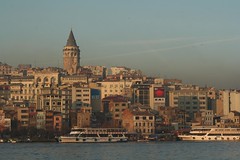
The Galata Tower
Click photo to see slideshow
or here for all Istanbul pictures

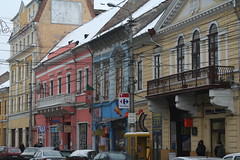
In Rome, Madrid, Barcelona, Bucharest and Budapest we tried to walk the streets and discover the city attractions but we always suffered early defeats caused by the unfavorable temperatures of the European winter. There is only so much time you can spend in an under-budgeted, under-heated archaeology museum before you start dreaming of a cozy, warm room and a bed covered with lots of blankets. But despite the fact that we knew it wouldn’t be much fun to visit another big city in January we still went to Istanbul. Part of the reason to visit was that the cheapest flight to India that we found was leaving from Istanbul and the connection from Romania to Turkey came at a reasonable price as well. And once you made it to one of the great cities of the world because you had to, it would be a waste not to spend more time there to enjoy it.
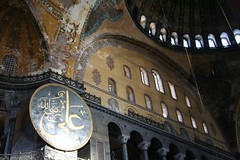
Inside Aya Sofia

Istanbul is the edge of the continent, where Europe meets Asia, a city where the coils of history unfurl in every street and back alley, like charging armies scampering through the scattered stones of long-gone magnificent royal palaces. Istanbul’s fate is unique among the histories of the great cities of the world: once the radiant capital of a glorious Christian empire, which slowly declined to comprise just the city itself, Constantinople fell to its attackers after one final battle of historic proportions, only to become the center of a new world power, a Muslim city that in time surpassed the leftover glory of its Byzantine heritage and reinvented itself. I’ve always considered the fall of Constantinople in 1453 as one of the most harrowing moments in history, sad for the simple yet unsettling fact that its conquest completely erased something that existed and replaced it with something new almost overnight. The newly beginning city rested on the pillars of its inheritance; it adopted some of its forms (best seen in the shape of its mosques, which all look like its older Greek-orthodox churches) but it was apparent that nothing would be the same again...
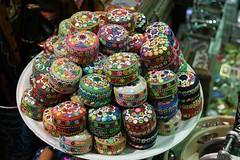
A stack of pretty boxes
at a stand in the Bazaar

At a glance, Istanbul is a gigantic city rolling on roof-covered hills over the horizon, but its main attractions (the places a travel guide book would recommend you to visit) are all within the old city and across the Golden Horn in Pera (the modern Kadikoy) and Galata. Most of those sites are accessible by a simple yet clever network of tram, metro and underground funiculars (in fact we didn’t have to take the taxi once during the 6 days we spent in town). The best places to stay are the Sultanahmet area at the south-eastern edge of the old town, and Taksim Square in Galatasaray. If you stay in Sultanahmet you’re within walking distance of the historic attractions (Hagia Sophia, the Blue Mosque, the Topkapi palace, the Byzantine mosaic museum, the underground Basilica cistern and the incredible Grand Bazaar).
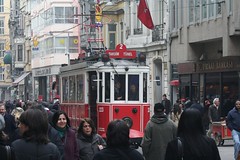
Shopping on Istiklal Caddesi

In Taksim square you are close to the glitzy, modern avenues lined up with designer boutiques and coffee shops (including Starbucks, yes!), and to good but more pricey restaurants. We stayed at the Istanbul Hostel in Sultanahmet and had an easy time getting to the historic sites, but we couldn’t resist taking a couple of trips across the water to walk on Istiklal Caddesi for a mini shopping-spree, sprinkled with stops at Starbucks to buy good but overpriced coffee. Speaking of prices, Turkey may still be cheaper compared to Western Europe but not by much. At 1.15 lira to a dollar the prices seemed vaguely familiar and not at all comforting to the wallet. Museum entrance fees are usually around 10 Lira, coffee is 4 or 5 (coffee!), a cheap dinner for two costs around 20 Lira and an expensive one may beat a hundred. Just like home, don’t you think?

In the Spice Bazaar

You can get döner kebab at the bazaar for just 1 Lira, but who wants to survive on kebabs only, in a city renowned for its luscious foods? Moreover, with the cold and all, your best bet is to find a good and reasonably-priced restaurant near the hotel and stick with it in case you’re too lazy to take a trip across town through the chilly night. And that’s exactly what we did, and ended up eating soup, pide (Turkish pizza) and kebab at this place called Karadeniz (translated: The Black Sea) almost every day, either for lunch or dinner, until the owner called me his friend (presumably because I was the one he was giving the bill too). And I should not forget the divine baklava and sahlep sold at the nearby pastry shop...

Eating food on the street will challenge you with a little detail: there is no trash bin in this city, I swear, no place to throw an empty Starbucks cup. And still, it looks clean. Somewhere, the mayor must be proud.

And so for us, Istanbul was the end of one part of our trip, the last of our wanderings in Europe, and the beginning of a new path: Asia.

Posted from Kumaly - Kerala, India.

Click here to read more...

Thursday, January 3, 2008

Home? What home?

Cluj-Napoca
Click on photo to see slideshow
or here for the Cluj-Napoca set

I was born in Cluj-Napoca and have grown up and gone to school and college there. I got beaten up and I fell in love for the first time in this town. I got my heart broken many times over and broke other hearts in turn. Most of my lifetime friends lived at one time or another in those drab apartment neighborhoods. When I kissed a girl for the first time, we were both so embarrassed to be seen kissing, that we hid in an elevator and took rides up and down for a few minutes. I used to smoke cheap cigarettes in the high-school's second-floor boys' bathroom, afraid that I would get caught by the vigilante professors. I had the first girlfriend-pregnancy scare sometime when I lived here. I certainly got drunk for the first time at a party in my hometown – although I can’t remember when. I broke my front teeth on a concrete sidewalk while playing football in my neighborhood. I took long walks through the park with girls to whom I did not dare confess that I liked them. I listened to loud heavy-metal music annoying my parents and the neighbors. As a kid, I beat up an old man who was trying to beat me up for playing in front of the apartment building during the afternoon "mandatory" quiet time. I walked the streets, I rode a bike, I sat on a bench and looked at the pigeons in the main square, day-dreaming.

Communist architecture

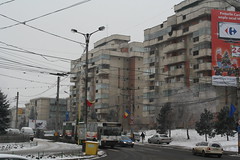
I have many memories, fond memories that tie me to Cluj. Yet now, each time when I visit my old town, once every few years, it looks smaller and more alien to me than before. There’s not much left to keep me here. Sure, I have a mother who still lives in the same big, old apartment, the smells of the streets are still familiar, and I still smile when I see the tiny hill in the neighboring church yard where we used to sled each winter when the snows came. But these are only places, and most of them have changed by now. The sad concrete boxes erected in communist times to house the workers who were supposed to build the golden future of the socialist republic are now covered with capitalist ad banners and all the ground-floor apartments have turned into little shops. Huge department stores have opened everywhere. Fancy bars and clubs have mushroomed all over downtown. The money is different. The people have changed. Or maybe I have changed...

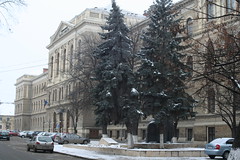
Babes-Bolyai University

When I think of what I miss about my country it’s always places, smells and colors; an image of a grassy hillside dotted with hay stacks under a late summer azure sky, a memory of hiking on a muddy footpath through the woods on a rainy day. It’s never the people. Most of my friends from those times are somewhere else in the world; the few ones who still live in town make it easier for me to survive my stay. The eleven years I spent in other countries have taken their toll. Even the language distinction has begun to fade away. I no longer feel more comfortable speaking Romanian than when I use English. I no longer consider Romanian a privileged language among those I speak. I hardly even read in my mother tongue anymore and I never write, nothing besides short emails. I can't even talk about fixing cars and riding horses - the two hobbies I love most - in Romanian, for lack of appropriate vocabulary. It's just another language now, albeit one that I won't forget even if I lack the practice.

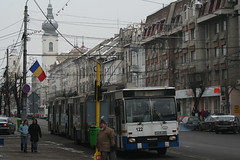
A trolley on the boulevard

I have never approved of the nostalgia of those immigrants who can’t wait to return “home” every vacation, at Christmas, Easter and in summer as well, and who make sure to tell to everybody who listens that if it weren't for the better money, they wouldn't live “there,” among the cold foreigners, for one single day. From where I stand now I couldn't imagine returning to this place for good, although living conditions have improved a lot, the money is good in Romania now, and I still have the name of the country written on my passport. My link to the spiritual depths of this land and people has been severely weakened. My home is elsewhere now. Without my intention I have become more American than apple pie (if you don't count the accent), and I can’t picture living anywhere else... except on the road.

Click here to read more...

Wednesday, December 5, 2007

Nothing to do in Seville

When in Seville, do what the locals do
Click on pic to see slideshow
or here for the Seville set

As we boarded the train at the Atocha station in Madrid, we had lots of plans for the four or five days we were going to spend in Andalucía. But when we arrived in Seville everything fizzled out little by little and we ended up spending the next three days eating well and shopping. First, the plan to travel to Granada petered out; taking the train or bus there and then getting from Granada to Barcelona was going to cost too much. So when we found a cheap plane ticket from Seville straight to Barcelona we decided to forgo the Alhambra. In Seville itself, we weren’t very proficient with the monuments – we walked the beautiful narrow streets of the old town but didn’t enter one single tourist attraction. The magnificent Seville cathedral was charging 7.50 Euros entrance fee, and I decided that the Catholic Church would not have my money anymore. If I can’t get into a church for free, I won’t get in at all (although I was going to break this oath later at the Sagrada Familia in Barcelona).

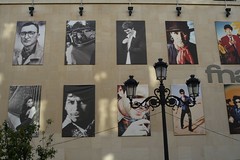
The fnac megastore

We compensated our lack of cultural interest by spending a lot of time at fnac (the French cultural and consumer-electronics megastore) and El Corte Ingles, buying the iPod Nano G3, and downloading a lot of music. And no doubt, we redeemed ourselves by sampling the elaborate culinary offerings of the many tapas bars spread all over town. “Es arte, no es cocina,” the waitress at Los Coloniales told us as she brought a delicious plate of sandwiches with foie gras and cold roasted pork cuts, topped with fried quail eggs. I licked my fingers knowing I have reached a new apex of culinary delight. And things were going to get even better…

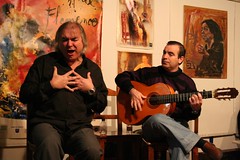
Flamenco drama!

In defense of “traditional” cultural activities, on one of the evenings we went to see a free flamenco show in a bar. The singer and the guitar player put up a good, passionate performance, but it was not amplified, and a lot of the people in the back of the bar kept on talking. The background noise bothered the singer (who had to keep reminding the audience not to speak and not to smoke) and annoyed the people who were actually there for the music. Of course, if the show hadn’t been for free, this wouldn’t have happened.

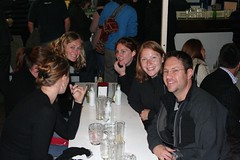
Paul and some girls

The Oasis Backpacker Hostel, our lodgment in Seville, is a nice renovated building with a great location, but, as it happens with most places which have “backpackers” in their name, it is very loud. The hotel is built around a small inner courtyard which has been covered with a glass roof, and now holds the reception, a few couches and the computers with free internet access. As such, this makeshift “lodge” is a very popular place, and it’s no surprise that the rooms at the higher floors get a share of the conversations that happen downstairs. The hostel seemed to be full with nothing but young American students, most of them girls; the word “like” kept popping up in their conversations - which were mainly about drinking or bad boyfriends - with an unprecedented frequency. But among all those aliens we meet Paul, an American traveling alone around the world not for one, but for two years (of which he has completed half). We spent some time with him exchanging travel ideas and blog tips (is there even one person traveling for a long time nowadays, who doesn’t keep a blog?). He has lots of stories and good pictures at http://pauls-paradigm2.blogspot.com.

At the end of the three days, we left Seville largely unexplored and headed for Barcelona hoping for good weather, more good food, and eager to meet my friend Robert whom I hadn’t seen in something like 5 years…

Written in Barcelona

Click here to read more...

Saturday, November 24, 2007

Ciao Roma!

In November, temperatures in Rome are close to the freezing point; every other day the rain washes the streets while gusts of wind threaten to sweep the flimsy umbrella - which you just bought for 4 euro at the subway exit - out of your hand. Yet being in Rome will redeem the frightful weather and your uninspired decision to visit Italy in this ugly time of the year.

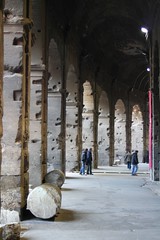
Inside the Coliseum
Click on pic to see slideshow
or here for the Rome set

There is something about Rome that puts it ahead of all other famous cities that I have seen. I tried to define that quality so I can understand the fascination better, but it still eludes a precise explanation. It has something to do with the incredible mix of history that permeates every stone and every street. It is certainly about the great food and red wine. And no doubt, the friendly and boisterous Romans are part of the mix that makes the city so special. But no great words or hard work are needed to sell Rome to visitors – even in the midst of this harsh winter, the city was full with tourists and the cheap hotels were booked solid.


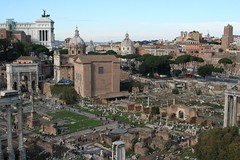
The forum

For us, the 5 days we spent in town were hardly enough: from taking a stroll through the ruins of the Roman forum after working out a bit while climbing the stairs to the upper levels of the Coliseum, to staying in line in the rain waiting to get into the Vatican museum, from shopping along the Via del Corso to having a cheap delicious dinner at an osteria in Trastevere, from visiting the Pantheon, the most striking example of surviving ancient Roman architecture, to cruising along the walls of the narrow streets around the Campo dei Fiori – there was no shortage of things to do and see in Rome. Prospective guide-book itineraries are entitled “Rome in 1 day” or “Rome in 2 days”, but in such short time you can only skim the surface of things and collect some unforgettable but superficial first impressions.

Gallery at the Coliseum

Rome is demanding, but easy to discover. The metro, while quite underdeveloped for a city this size, gets to a few essential spots, like the Termini railway station (best neighborhood for cheap hotels and easy access) the Coliseum and the Vatican. There are plenty of buses going where the metro won’t, and with a small map of the bus network you can easily figure out how to get between any two points in town for just one Euro. Taxis are not expensive if you stick to the area within the old city walls, where most places seen by tourists are anyway. Finally, walking across town is not such a bad deal - if you aren’t in a rush and the rain has stopped.

We left Rome again with a desire to return as soon as we can... If only for the fact that shortly after getting into the famous Vatican Museum and paying for the ticket, we were gently ushered out because the museum was closing early in winter… at 12:30pm, no kidding. I feel like I’ve been ripped off by the Catholic Church!

Posted from Madrid.

Click here to read more...

Saturday, November 17, 2007

Tzatziki and house wine by the liter

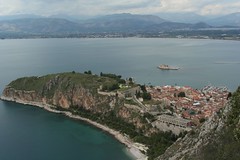
Nafplion old town
Click on pic to see slideshow
or here to access the Nafplion set

“3.60 Euro for Tzatziki? No, it’s too expensive; let’s look at the next taverna down the street.” Over the last few days we have worked out a system to pick restaurants for lunch or dinner – the tzatziki (a typical Greek bread dip made with creamy sheep yogurt, cucumbers and garlic) has to be under 3€ and the house red wine under 4€ for ½ liter. We drink wine by the liter in Greece and always the “house” variety, which, unlike in the United States, is a decent choice in most restaurants. The rest of our lunches and dinners typically consist of Greek salads (cucumbers, tomatoes, onions, olives and feta cheese), mousaka, souvlaki, gyros, loukaniki or other Greek meat specialties, and the ubiquitous French fries that accompany every Greek dish. For breakfast, unless it’s the simple choice that some hotels offer, we always have a cup of delicious yoghurt topped with honey and walnuts. Like the real tzatziki, the traditional plain Greek yoghurt is made with sheep milk, which is creamier, more consistent, and probably contains significantly more calories than the cow milk variety. I have not searched the specialty “gourmet” stores in Seattle, but this kind of yoghurt is not available in the grocery stores at home. In fact, in the US, the large stores usually carry one single brand of plain, unsweetened, yoghurt, and it’s often inedible. But I’m sure there must be some American Greeks somewhere, who have found a way to bring the flavors of their old home to the new continent…

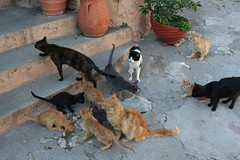
Greek cats are well fed

Arriving in quiet, cobbled, manicured Nafplion, after the three weeks spent in chaotic Egypt, was a bit like waking up gradually from a dream and figuring out that the world still made sense. Nobody was harassing me, trying to get my money; nobody was insisting that I go to their shop. I was driving a car and all the roads were clearly marked in Greek and Latin letters. There was no garbage lying in the ditch by the road. The streets were quiet - it was November, after all. Traveling in Greece at this time of the year can be very convenient: the off-season hotel discounts are very enticing; often you pay the half of the rate the same rooms go for in high season. You don’t even need to reserve anything in advance, since the supply exceeds the demand by far. The weather is generally good for hiking and sightseeing (not for tanning, mind you), albeit a bit erratic – you may have to deal with alternating days of rain showers and beautiful skies. But Greece is also a country that would sober up any tourist who has travelled extensively in the third world – prices are, well… European, and this reflects best in the rates charged for internet access – they average around 4€ (about 6$) for one hour. Ah, where is Bolivia…

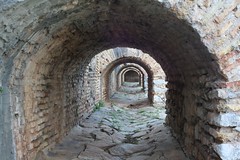
Tunnel

There was not much reason to go to any of the islands at this time of the year, so we stuck with the many historical attractions on the mainland. We picked up a rental car at the Athens airport and drove to Nafplion, a jewel of a sea-side town, with a pretty historical center of narrow streets, lined with tavernas and shops, dominated by the Palamidi fortress - a gigantic system of fortified walls built by the venetians on top of the hill overlooking the town, during one of the periods they ruled the place. Not far from Nafplion are the antique amphitheater at Epidavros (restored and used for festivals in summer) and the ruins of ancient Mycenae. With all good intentions, we tried to visit the city of mighty Agamemnon, but the new owners, the museum authority of Greece, were closing the place at 2:45pm in winter and we got there too late…

Mystras castle
Click on pic to see slideshow
or here to access the Byzantine Towns set

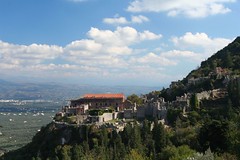
The byzantine hill towns of the southern Peloponnese, Mystras and Monemvasia, tell a different history lesson. Although they are mostly in ruins now (Monemvasia however, has a few beautiful restored streets where tourists can sleep and spend money), they live on in the spirit of countless movies with medieval setting. Every fictional town built in terraces on the slopes of a mountain, with narrow, cobbled streets winding through stone gates, with houses and defensive walls hanging above rocky ravines, with an imposing fortress on the top of the hill, overlooking the valley, is in fact made up from the blueprint of these byzantine towns. They are quite interesting to visit, even if just to wonder what it would have taken to keep a city like that functioning – the sewers, the water supply, the transportation, the social life. It must have been nice to live in a town where every single house had a view…

The Tholos at Delphi
Click on pic to see slideshow
or here to access the Delphi set

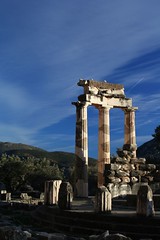
Back in antiquity and out of the Peloponnese, we stopped at Delphi to look for gods hidden among the scattered fallen column stones and the remnants of the once-glorious temples of Apollo and Athena. There were no gods, just tourists there – Delphi is nowadays the main day-trip destination of tour groups visiting Athens. But it was November and the invasion of tour buses was in minor key; even if the weather was beautiful, ideal for hiking up the slopes of Parnassus, there were so few other tourists around that I was able to take some pictures of the ruins without including people in them – such a feat would have been impossible in summer.

The Parthenon on the Acropolis
Click on pic to see slideshow
or here to access the Athens set

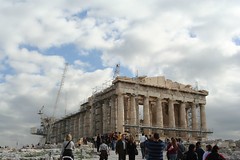
Finally, there was Athens – a big, dull, (and nowadays clean as well) city, where tourists get bored fast. The place is full of ancient history, but nevertheless, nobody falls in love with it. I didn’t either, but the food was good and the discovery of a Starbucks store in town made my stay sweeter. I went to the post office as well, but even if you count the fact that I went looking for it on the wrong street for a while (before realizing that it must have moved since the Lonely Planet book that I had was researched), the experience was nothing like the one in Egypt. Athens may not be glamorous or charming, but it has the incredible Acropolis, with its 25-century-old temples perched upon a craggy rock rising in the middle of the busy town, and that’s enough to keep you coming back. You have to stop here on your way to the islands anyway…

Published from Rome.

Click here to read more...